
Aftermarket specialist Arttu Kohtamäki emphasizes the importance of annual maintenance and regular condition checks for Japa machines.
"Japa firewood processors are designed for easy maintenance – all maintenance points are easily accessible on our models. Regular maintenance reduces component wear, lowers operating costs, and extends the machine's lifespan for decades. This ease of maintenance is crucial to ensure the machine's reliability and economic efficiency in the long term."
Kohtamäki recommends the following measures for annual maintenance, some of which should be performed more frequently during normal operation:
- Cleaning the machine
- Replacing hydraulic oil and filters
- Bleeding the chain oil pump
- Maintaining the guide bar and chain
- Adjusting the alignment and tension of the infeed conveyor belt
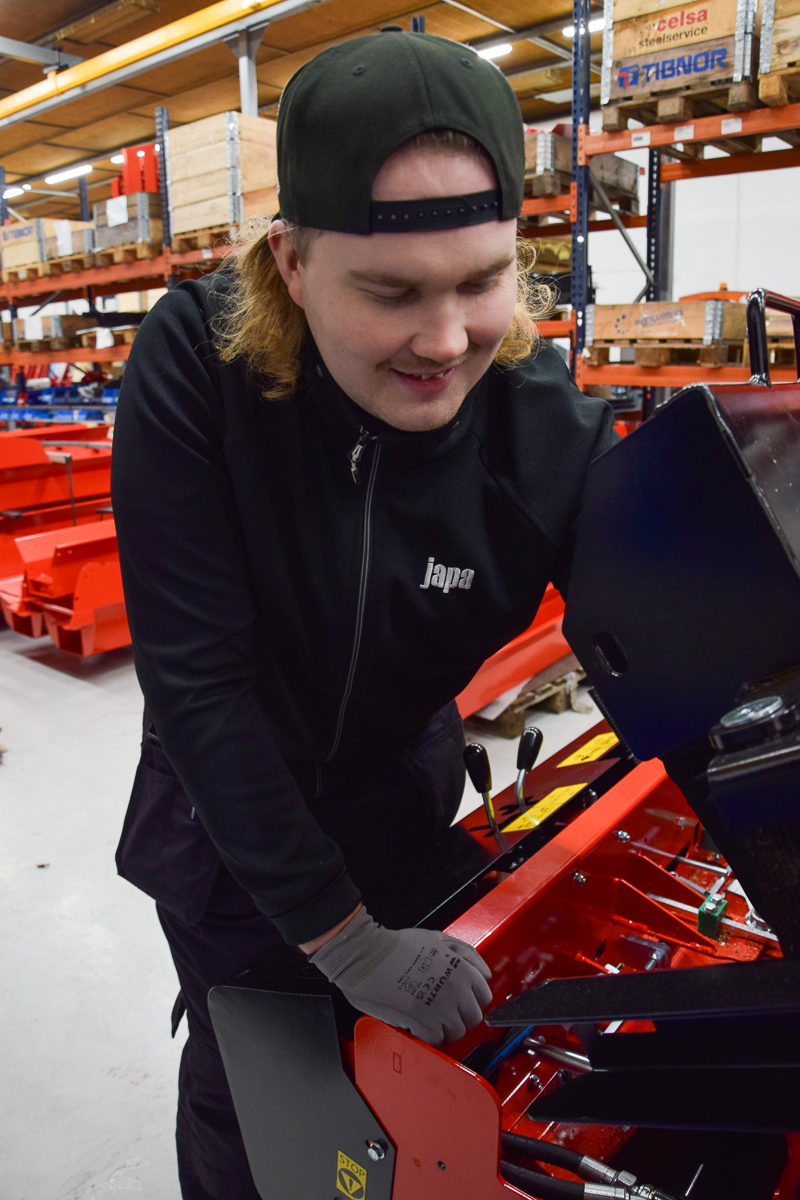
1. Cleaning the machine
Kohtamäki emphasizes that cleaning the machine is an essential daily maintenance task to prevent work interruptions.
"After each use, the area around the splitting wedge should be cleaned, including the slots, the debris grate, and the conveyor's cleaning flap. Monthly cleaning of internal parts is recommended to prevent blockages, such as accumulated wood chips under the slider."
In cold conditions, cleaning after each use is particularly important to prevent chips and sawdust from freezing onto the machine. This allows the next use to begin without extensive cleaning work.
2. Replacing hydraulic oil and filters
Contaminated hydraulic oil can lead to premature wear of components, leaks in hoses and connections, and overheating. It can also cause pressure drops, leading to hydraulic component malfunctions. Machines exposed to temperature fluctuations outdoors can accumulate water in the oil due to condensation or leaks, which impairs hydraulic performance and can damage the machine.
"Hydraulic oil and filters in Japa firewood processors should be checked regularly and replaced if necessary, especially after long periods of inactivity. Clean oil and fresh filters ensure that hydraulic components operate reliably and optimal oil temperature is maintained," says Kohtamäki.
Watch the video: Adding chain lubricant oil to Japa firewood processor: Adding chain lubricant oil to Japa firewood processor
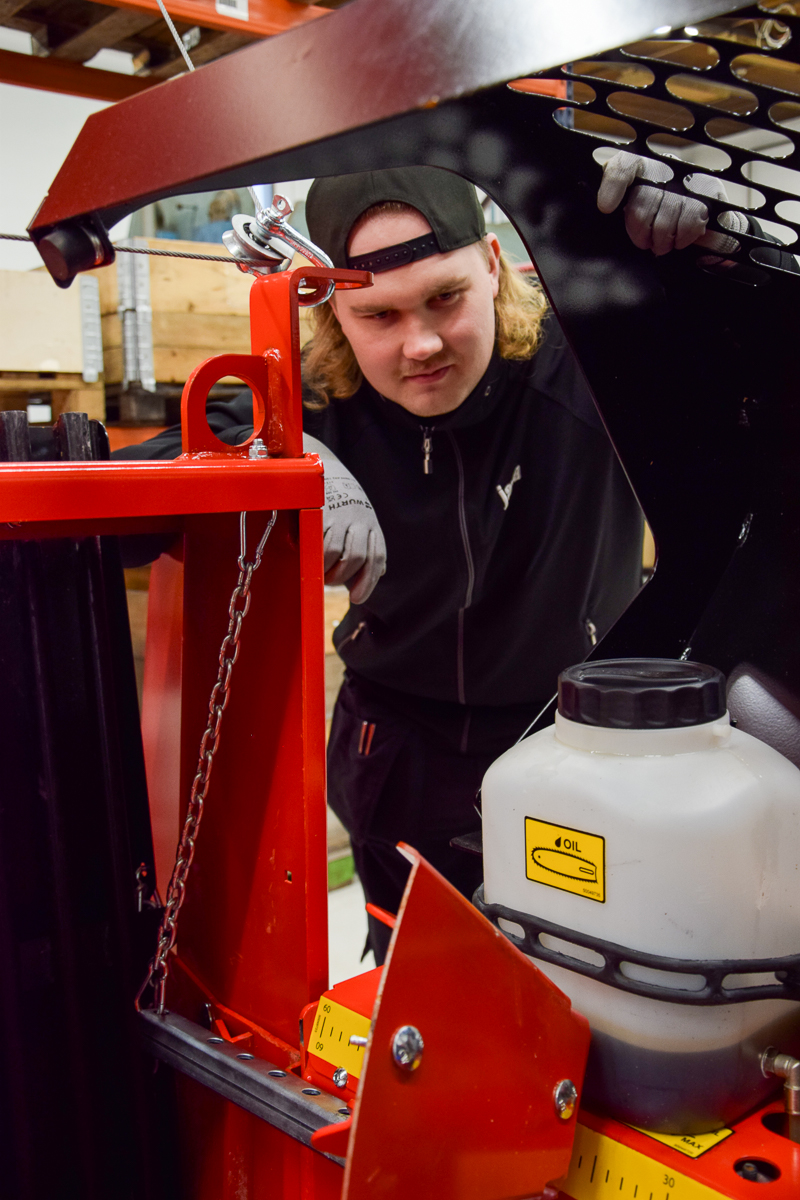
3. Bleeding the chain oil pump
A properly functioning chain oil pump is crucial for the condition and lifespan of the chain and guide bar. Insufficient lubrication causes the chain to stretch and require more frequent tensioning, which can eventually lead to chain breakage. Kohtamäki emphasizes the importance of monitoring the chain's oil flow.
"If air enters the oil lines, the oil will not flow evenly to the chain, reducing lubrication and increasing wear on the chain and guide bar. Regular bleeding of the hydraulic oil pump is an important maintenance task: it removes air from the lines, restores even oil flow, and protects the chain and guide bar, while ensuring smooth machine operation."
4. Maintaining the guide bar and chain
The condition of the guide bar and chain is critical for the efficient operation of the firewood processor. A dull chain reduces cutting speed, increases wear and overheating of the guide bar, and stresses the sprocket and guides. For professional use, the chain should be replaced frequently – often daily – with a new or sharpened one.
Sharpening can be done manually with a round file or with an electric sharpener. Precision is improved with filing guides and holders. The lifespan of the guide bar can be extended by regular turning, usually after every third chain maintenance. Additionally, the guide bar should be checked for bends or cracks.
"Regular replacement, sharpening, and inspection, as well as turning the guide bar, reduce wear and ensure the machine operates optimally," explains Kohtamäki.
5. Adjusting the alignment and tension of the infeed conveyor belt
The infeed conveyor belt runs between two rollers, and its alignment is crucial for the reliable operation of the firewood processor. While the machine is running, the movement of the belt can be visually checked to ensure it runs straight.
"A well-aligned belt stays on track, preventing premature wear and stretching of the edges. A misaligned belt, on the other hand, can run crooked, increasing the risk of stretching and affecting the feeding of logs into the cutting area – this can slow down work and lead to premature maintenance needs," explains Kohtamäki.
Belt tension is also an important adjustment point. Optimal tension is achieved when the belt can be lifted about 5 cm from the surface. Adjustments can be made using the tensioning screws on the front and rear rollers of the conveyor. Correct alignment and tension ensure smooth operation and extend the life of the belt and machine.
Contact your nearest Japa dealer if you need spare parts for maintenance. Regular maintenance of your firewood processor ensures it remains in optimal operating condition and maintenance runs smoothly.